Introduction: The Day the Coding World Changed
What is Anthropic’s “Claude Mythos” and Why Does It Matter?
The world of technology moves fast, but every once in a while, a milestone drops that completely redraws the map. We recently witnessed exactly that kind of shift. The tech community was rocked by news regarding Anthropic’s latest frontier model, known as Claude Mythos Preview. If you have been keeping up with standard AI news, you know that Mythos was built for a much more intense purpose: finding and breaking down software security vulnerabilities at an industrial speed.
When Anthropic tested this model, the results were staggering. Mythos managed to look at major operating systems and instantly uncover thousands of high-severity security flaws. What makes this terrifying, yet fascinating, is that many of these bugs were over twenty years old. They had successfully survived decades of meticulous reviews by the world’s smartest human engineers and millions of automated corporate testing scripts. Claude Mythos found them and mapped out how to use them in under 10 minutes. This isn’t just an upgrade; it is a brand-new era of industrialized exploitation where software risks are generated automatically. To survive, our defensive strategies must pivot from slow, manual checks to dynamic, automated AI threat intelligence.
Why Manual Code Checking Just Failed the Speed Test
To understand why this matters to the average software engineer, IT student, or business leader, we have to look at how we used to do things. Traditionally, code security relied heavily on manual code auditing. A team of developers would finish building a feature, and then a dedicated security engineer would sit down to review the lines of code. They would trace how data moved through the application, hunting for backdoors or logic mistakes before the software went live. It was a slow, deliberate, and deeply human process.
Against an offensive AI threat, that manual process is now like trying to race a Ferrari on a bicycle. When bad actors or autonomous systems can use models to scan an entire corporate digital ecosystem, find a hidden vulnerability, and build a working attack payload in less than 10 minutes, human timelines shatter. Security teams used to have days or weeks to patch a bug once it was found. Today, that “patch window” has vanished. If an exploit takes minutes to create, a human review process that takes days is simply a recipe for failure. The speed gap
The gap between machine attacks and human defense has become too wide to ignore, proving that manual auditing has officially hit its expiration date.
The New Reality for US Tech Professionals
It is easy to look at a machine that finds twenty-year-old bugs in minutes and think, “Is the human developer becoming obsolete?” But this is where we need to separate fear from reality. This shift is not a signal to panic; it is a call to adapt and upgrade how we work. AI is rewriting the rules of the tech landscape, and as history has shown, the professionals who thrive are those who learn to master the new tools rather than fight them.
The new reality is that the demand for technical talent in the United States is shifting focus. Companies no longer just need people who can blindly churn out lines of code; they are desperate for professionals who understand how to secure that code in an AI-driven environment. Understanding AI threat intelligence is transforming from an advanced niche skill into a basic requirement for career survival. Imagine the incredible impact of positioning yourself at the forefront of this shift, turning a massive industry disruption into your personal competitive advantage. By embracing this change early, you can step into roles that didn’t even exist a few years ago, securing your place in the future workforce.
The New Cybersecurity Playground: AI vs. AI
Why Attackers are Using AI (And Why We Must Too)
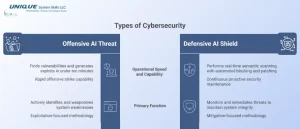
Cybersecurity has always been a game of cat and mouse, but the playground has fundamentally changed. Today, the threats we face are automated, continuous, and scalable. Bad actors are actively leveraging smart machines to run automated sweeps of public and private code spaces, looking for any crack in the armor. They are not sleeping, they do not take breaks, and they can launch multi-stage attacks across hundreds of networks simultaneously.
Because adversaries are using smart machines for offense, human defenders must use AI cybersecurity tools for developers to fight back. You cannot fight machine-scale automation with human keystrokes alone. If an offensive system is hunting for flaws at lightning speed, your defensive system must be running in the background, continuously analyzing behaviors, predicting threats, and blocking attacks in real time. This is the essence of modern cybersecurity: it is an AI vs. AI environment. Survival requires deploying smart, predictive software shields that can think like an attacker and respond at the exact same machine speed.
What is Collective Defense? (The Project Glasswing Story)
The scale of this new tech landscape is so massive that not even the world’s largest companies can fight it in isolation. When Anthropic realized exactly how powerful their Claude Mythos model was, they chose not to release it openly to the public, recognizing the extreme danger it posed if misused. Instead, they launched an exclusive, highly secure initiative known as Project Glasswing. They brought together the biggest titans in technology—including Amazon, Apple, Microsoft, Google, and Nvidia—to build a collective defensive wall.
Initially kept strictly confidential, Project Glasswing recently opened up its communication channels. These tech giants realized that the only way to stop a global, automated threat was through radical transparency and shared knowledge. Under this new model, partners are permitted to publicly share their threat intelligence, code fixes, and defensive tools with outside security teams, government regulators, and the open-source community. This is what we call collective defense: the belief that a bug discovered and patched by one company tonight should automatically protect every company around the world tomorrow. By understanding this collaborative approach, modern IT professionals can learn to leverage global AI threat intelligence data to secure their local systems.
Why Every Developer Needs to Early Defense
The Problem with Fixing Bugs at the Very End
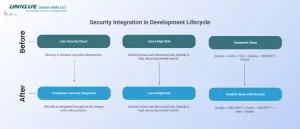
In traditional software project management, security was treated like the final quality check on a factory assembly line. Developers would spend months building an application, and right before it was launched to customers, the security team would run a sweep to look for vulnerabilities. If they found a major flaw, the project would grind to a painful halt. Code had to be rewritten, databases had to be restructured, and timelines were completely blown out.
In the era of rapid development and machine-speed threats, waiting until a software project is finished to check for security is incredibly expensive and dangerously irresponsible. Trying to patch a fundamental architectural flaw right before launch is like trying to fix the foundation of a house after you’ve already painted the walls and put on the roof. It results in sloppy patches, massive budget overruns, and severe deployment delays. This major operational bottleneck is exactly why the industry is demanding a structural change in how we think about safety.
Why AI Coding Assistants Make Mistakes
While these AI assistants are brilliant productivity tools, they are not perfect security experts. They generate code by scanning massive public repositories across the internet, meaning they
frequently copy outdated code patterns, insecure API setups, and known structural flaws that have been floating around the web for years. If a developer blindly copies and pastes an AI-generated solution without testing it, they are inadvertently injecting vulnerabilities straight into their corporate environment. This reality is why comprehensive cybersecurity training for software developers is no longer optional; humans must step up and serve as the ultimate smart safety filter for automated code.
The most valuable tech professionals are those who can seamlessly run human-AI pair programming workflows without sacrificing corporate safety. When you can look at an automated code block, instantly recognize a subtle vulnerability like a prompt injection or a data tracking error, and fix it on the spot, you become indispensable to your team. This proactive skill set saves companies millions of dollars in potential data breach damages and patch work, turning security into an active driver of corporate innovation and speed.
The Modern IT Career Toolkit (Made Simple)
Why Learning Python is Your Best Defense
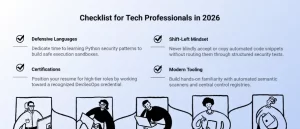
If you are looking to build or upgrade your toolkit for this new tech environment, you might wonder where to focus your energy. The answer is simpler than you think: master Advanced Python for AI security. Python has long been celebrated as the undisputed king of data science and machine learning development. However, because it is the primary language used to build modern AI models, it has also become the primary language used to construct the digital shields that protect them.
When autonomous AI agents interact with corporate systems, they often write and execute temporary custom scripts on the fly to solve business problems. Without strict programmatic guardrails built directly into those Python environments, these agents can easily expose systems to remote code execution risks or unauthorized data access. By learning advanced, defensive Python patterns and utilizing robust, privacy-centric software libraries, developers can build safe digital sandboxes. This coding knowledge allows you to set up automated background scripts that continuously calculate real-time safety scores, giving your team the exact layout needed to block multi-stage cyberattacks before they spread.
The Rise of the Safe AI Specialist
As these technical requirements rewrite corporate playbooks, we are witnessing the rise of a brand-new career category: the Safe AI Specialist. Across the United States, companies are realizing that they have plenty of people who know how to use AI to generate text or images, but a massive shortage of professionals who know how to manage, audit, and secure these intelligent systems safely.
This talent shortage has created a massive wave of high-paying job openings for professionals who hold a validated DevSecOps AI certification. This certification proves to employers that you know how to bridge the gap between fast-paced cloud deployment and machine learning security. It validates your hands-on ability to automate corporate firewalls, run AI-powered static and dynamic safety testing suites, and manage the unique risks of automated software components. For tech professionals and students, earning these specialized credentials is like fast-tracking your resume straight to the top of the hiring pile.
Turning Tech Disruption into Your Biggest Career Promotion
It is completely natural to look at massive technological shifts and feel a bit overwhelmed by how much there is to learn. But history teaches us that tech disruptions are actually the absolute best times to launch or elevate a career. When the rules of the game change for everyone simultaneously, legacy experience loses its monopoly. A student or a career changer entering the market today with fresh, up-to-date knowledge on automated AI threat intelligence can easily outpace a traditional professional who refuses to adapt.
How Unique System Skills Prepares the US Workforce
Upgrading Your Skills: Practical Cyber Training at USS
To navigate the rapidly changing technology landscape, you need a clear, practical, and structured curriculum. This is where Unique System Skills LLC (USS) comes in to help empower today’s American workforce. USS is dedicated to providing beginner-friendly, practical, job-ready training programs that convert complex technology concepts into actionable and real-world skills.
USS focuses on providing you an industry-relevant education by providing you only the most relevant tools and workflows currently driving the industry. Your education will consist of a series of educational tracks, including specialized training in threat intelligence, vulnerability assessment and Management, and cybersecurity. Each track will give you the technical depth necessary to help you stand out from your peers and become an effective contributor in technology. Whether you are an experienced software engineer looking to expand into security, a student preparing for your first job, or an experienced professional seeking a career transition, USS has short-term programs that will allow you to learn at your pace and gain immediate confidence in the skills you acquire through each program.
Aligning Corporate Teams for the Future
Adapting to cutting-edge artificial intelligence technology (AI) isn’t only a problem for the individual, but it poses a problem for enterprises’ ability to protect their organizations from threats. In fact, both enterprise leaders across the United States believe that there are times
when their engineering departments are disjointed — with various teams of engineers utilizing different standards on how to securely utilize cloud networks and artificial intelligence. As a result, companies have significant vulnerabilities within their corporate intellectual property due to a lack of organization between teams to appropriately protect their assets.
To solve this corporate bottleneck, Unique System Skills offers comprehensive secure coding corporate training initiatives tailored specifically for American businesses. These programs help enterprises align their entire engineering workforce under a single, unified defense strategy. By giving your development teams clear, straightforward mitigation blueprints, USS ensures that your current employees can confidently identify risks, maintain clean audit trails, and easily pass tough federal compliance audits like SOX or GDPR. Upgrading your current workforce’s capabilities allows your business to launch innovative features fast without risking regulatory penalties or data leaks.
Getting Hired: Matching Trained Talent with Forward-Thinking Companies
At Unique System Skills, the mission goes far beyond simply delivering high-quality training and handshakes at graduation. USS understands that the ultimate goal of technical upskilling is securing a rewarding, high-impact career or finding the perfect talent to protect your growing business. This holistic vision is why USS seamlessly connects its educational programs directly to its robust, world-class Recruitment and Staffing services.
For students and professionals, this means you have an active career partner working behind the scenes to match your fresh skills with forward-thinking companies that are desperately hunting for AI-aware talent. For employers, it means you gain direct access to a thoroughly vetted pool of local professionals who are trained to handle machine-scale threats from day one. In an era where manual code auditing is dead and automated systems are changing daily, partnering with an established training and recruitment leader like USS is your best strategy. Take ownership of this technical shift right now: invest in your personal capabilities, master the framework of automated AI threat intelligence, and establish yourself as an indispensable tech leader for the future.